Call us now :07971189468
 Send Inquiry
 Send Inquiry
Direct Roving Glass Fibres
MOQ : 35 Kilograms, ,
Direct Roving Glass Fibres Specification
- Elongation
- Low
- Crimp Recovery
- Excellent
- Staple Length
- Continuous Filament
- Elasticity
- High
- Material
- Polyester
- Fiber Length
- Continuous
- Fineness (%)
- 0.8-2.0
- Pattern
- Dyed
- Use
- Filling Material
- Feature
- Anti-UV
- Binder Type
- Silane
- Compatibility
- UP, VE, EP, PF Resins
- Color
- White
- Thermal Resistance
- Up to 800C
- Moisture Content
- <0.15%
- Grade
- Industrial
- Linear Density (Tex)
- 300-2400
- Filament Diameter
- 13-24 micron
- Packaging
- Palletized
- Tensile Strength
- >1200 MPa
Direct Roving Glass Fibres Trade Information
- Minimum Order Quantity
- 35 Kilograms, ,
- Payment Terms
- Letter of Credit (L/C), Letter of Credit at Sight (Sight L/C), Telegraphic Transfer (T/T), Cheque
- Supply Ability
- 100 Kilograms, , Per Day
- Delivery Time
- 1 Days
- Main Domestic Market
- South India
Direct Roving Glass Fibres About
Clients can avail from us Direct Roving which is an E-glass continuous fiber having a single end. This type of roving has compatibility with different materials like Polyester (UP), Vinylester (VE) and Epoxy (EP). Having unique abilities, this type of roving is used for laminates and profiles. Clients also use it for weaving and knitting purposes. Before shipping we pack Direct Roving using tacky-pack or shrinkage packing.
Suitable for:
-
Weaving
-
Filament winding
-
Pultrusion
-
Thermoplastics compounding
-
Multi-axial fabrics
Used in:
- FRP grating
- Fishing rod
- Umbrella pole
- Tent pole
Technical Specification
| Linear weight | Size Content | Moisture content | Fibre Diameter |
|---|---|---|---|
| 150 10% ,300 | 0.40 0.20 | 0.20 max. | 13 |
| 600 10% ,1200 | 0.40 0.20 | 0.20 max. | 16 |
Characteristics:
| Internal Diameter (mm) | 240 |
| Height (mm) | 250 |
| Net weight (Kilos) | 10 20 |
Superior Mechanical and Thermal Performance
With tensile strength exceeding 1200 MPa and thermal resistance up to 800C, these glass fibres assure robust performance in demanding industrial environments. Their high elasticity and low elongation further enhance material durability, making them ideal for structural applications.
Versatile Resin Compatibility for Composite Benefits
The silane binder ensures reliable adhesion and seamless integration with Unsaturated Polyester, Vinyl Ester, Epoxy, and Phenol Formaldehyde resins. This versatility allows manufacturers to use the fibres in a wide array of composite products, optimizing strength and longevity.
FAQs of Direct Roving Glass Fibres:
Q: How are Direct Roving Glass Fibres typically used in industrial applications?
A: These fibres are primarily utilized as filling or reinforcing materials in composite fabrication due to their continuous length, high strength, and excellent elasticity. They enhance the mechanical properties of end products such as panels, pipes, and automotive parts.Q: What is the process for integrating these glass fibres with resins?
A: The fibres are laid or wound into molds and then impregnated with compatible resins like UP, VE, EP, or PF. The silane binder facilitates strong bonding between the fibre and resin, followed by curing to produce durable composite structures.Q: When should these fibres be selected for a project?
A: These fibres are ideal when projects demand high-strength reinforcement, thermal tolerance up to 800C, and compatibility with various resins. They suit both load-bearing and high-temperature industrial solutions.Q: Where are these Direct Roving Glass Fibres sourced from?
A: They are manufactured and supplied in India by reputable companies specializing in industrial-grade fibre production, ensuring consistent quality and reliable supply for domestic and international clients.Q: What benefits do the anti-UV properties and high crimp recovery offer?
A: Anti-UV features protect composites from degradation due to sunlight exposure, while excellent crimp recovery ensures the fibres regain shape after deformation, improving the resilience and lifespan of finished materials.Q: How does the packaging ensure product integrity during transportation?
A: The palletized packaging secures large quantities of fibres, preventing damage, moisture uptake (kept below 0.15%), and maintaining structural integrity from manufacturer to end-user.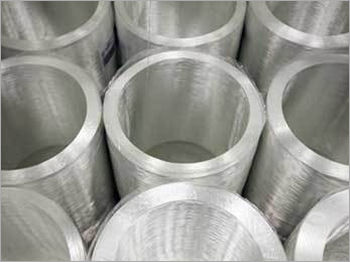
Tell us about your requirement

Price:
Quantity
Select Unit
- 50
- 100
- 200
- 250
- 500
- 1000+
Additional detail
Mobile number
Email

More Products in Glass Fibres Category
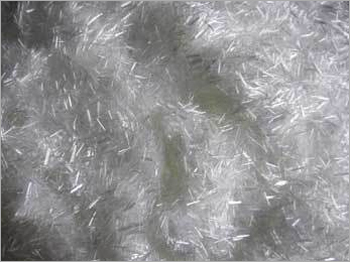
Chopped Strands
Price Range 120.00 - 150.00 INR / Kilograms
Minimum Order Quantity : 35 Kilograms
Pattern : Dyed
Feature : AntiUV
Material : Polyester
Use : Filling Material
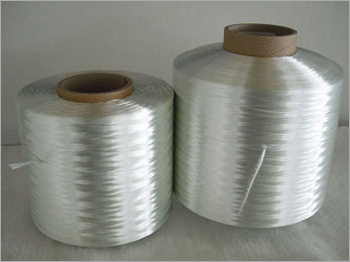
Assembled Rovings
Price Range 120.00 - 150.00 INR / Kilograms
Minimum Order Quantity : 35 Kilograms, ,
Pattern : Dyed
Feature : EcoFriendly
Material : Polyester
Use : Filling Material
Chopped Strand Emulsion
Price Range 120.00 - 150.00 INR / Kilograms
Minimum Order Quantity : 35 Kilograms
Pattern : Dyed
Feature : AntiUV
Material : Polyester
Use : Filling Material, NonWoven Fabric

"We mainly deals in Karnataka, Tamil Nadu, Kerala, Telangana, Andhra Pradesh, Pundicherry, Goa only."
Corporate Office
NO.233, Rahul Building,
HBCS 4th Stage, Rajajinagar Industrial Town,
6th Cross, Rajajinagar

 Send Inquiry
Our Products


No: 233, 'Rahul' Building, 6th Cross, HBSC 4th Stage, Rajaji Nagar Industrial Town,Bengaluru - 560044, Karnataka, India

Mr Ganesh
(Manager)
Mobile :07971189468
 Send Inquiry
 Send SMS
Developed and Managed by Infocom Network Private Limited.


